

Introduction
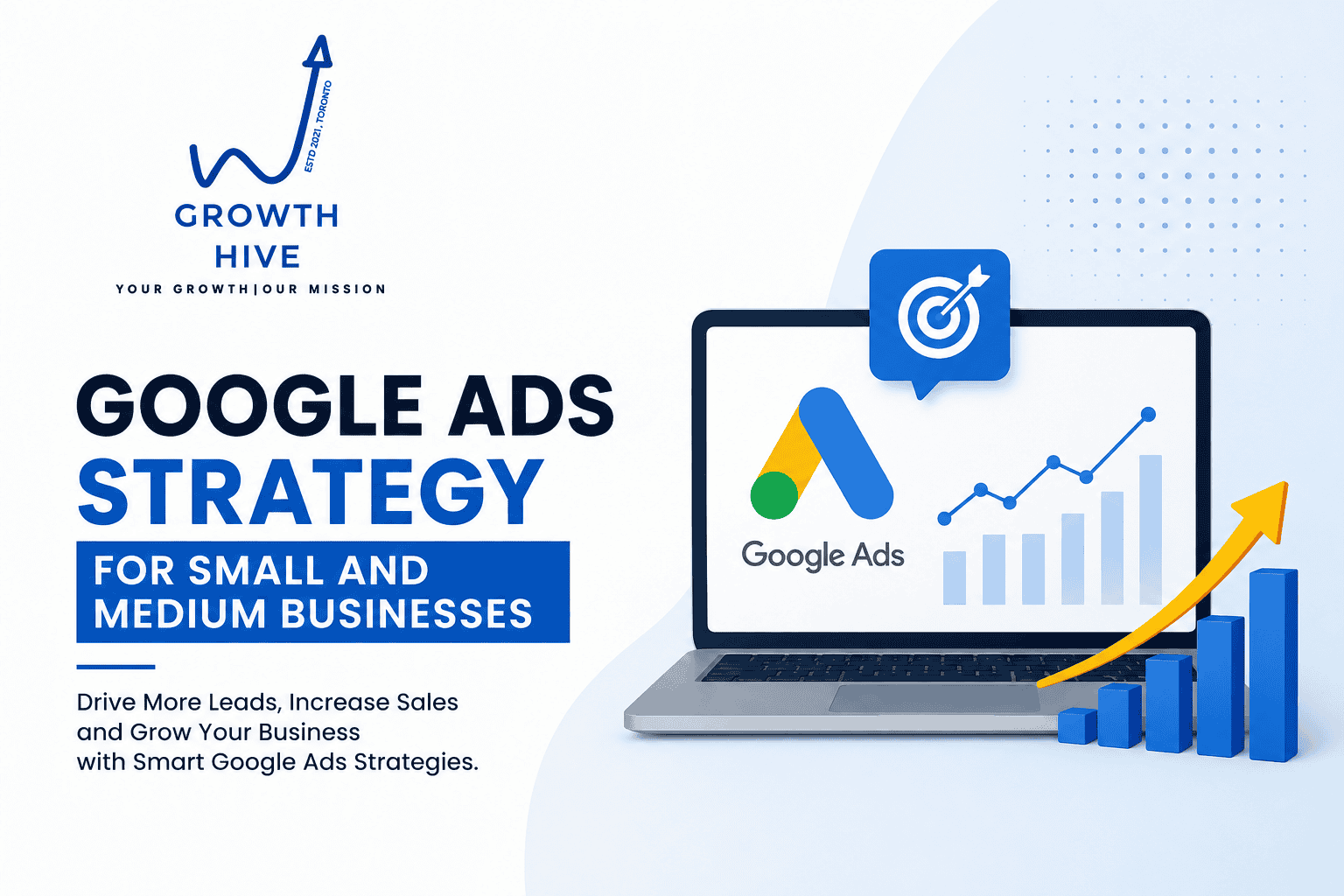
In today’s competitive digital landscape, small and medium-sized businesses (SMBs) need marketing strategies that deliver measurable results. While organic marketing plays an important role, it often takes time to generate consistent leads and sales. This is where Google Ads becomes a powerful tool for businesses looking to attract qualified customers and accelerate growth.
A well-planned Google Ads strategy helps businesses reach potential customers at the exact moment they are searching for products or services. Whether your goal is to increase website traffic, generate leads, boost online sales, or improve brand awareness, Google Ads can provide a significant return on investment when managed effectively.
Why Google Ads Matters for Small and Medium Businesses
Unlike traditional advertising, Google Ads allows businesses to target users based on their search intent. Instead of showing ads to a broad audience, your ads appear when people actively search for relevant keywords.
Some key benefits include:
- Instant visibility on Google search results
- Highly targeted audience reach
- Flexible budget control
- Measurable campaign performance
- Increased lead generation opportunities
- Better conversion tracking and optimization
For SMBs with limited marketing budgets, this level of targeting helps ensure every advertising dollar is spent efficiently.
Understanding Your Business Goals
Before launching any campaign, it’s essential to define clear objectives. Your Google Ads strategy should align with your overall business goals.
Common objectives include:
Lead Generation
Ideal for service-based businesses such as healthcare providers, law firms, home service companies, and consultants.
Online Sales
Perfect for e-commerce businesses looking to increase product purchases and revenue.
Brand Awareness
Useful for new businesses aiming to establish a strong online presence.
Local Customer Acquisition
Designed to attract nearby customers searching for products or services in a specific geographic area.
Having clearly defined goals helps determine campaign structure, bidding strategy, and performance metrics.
Conduct Thorough Keyword Research
Keyword research forms the foundation of every successful Google Ads campaign.
Focus on identifying keywords that reflect strong buying intent. These are search terms users enter when they are ready to take action.
Examples include:
- Emergency plumber near me
- Affordable digital marketing services
- Buy running shoes online
- Best accounting software for small business
Target Different Keyword Types
High-Intent Keywords
Users searching for solutions and ready to convert.
Long-Tail Keywords
More specific search phrases that often have lower competition and higher conversion rates.
Local Keywords
Keywords containing city, neighborhood, or service area names.
For example:
- AC repair in Dubai Marina
- Dentist in North Nazimabad
- Family lawyer in Houston
Long-tail and local keywords often provide better results for SMBs because they attract highly qualified traffic.
Build a Structured Campaign Architecture
Many businesses make the mistake of placing all keywords into one campaign. A well-organized account structure improves relevance and Quality Score.
Recommended Structure
Campaign Level
Organize by service, product category, or location.
Example:
Campaign 1: AC Repair Services
Campaign 2: AC Installation Services
Campaign 3: Duct Cleaning Services
Ad Group Level
Create tightly themed ad groups around related keywords.
Example:
Ad Group 1: Emergency AC Repair
Ad Group 2: Residential AC Repair
Ad Group 3: Commercial AC Repair
This structure improves ad relevance and increases click-through rates.
Write High-Converting Ad Copy
Your ad copy must immediately address the user’s problem while highlighting your unique value proposition.
A strong ad typically includes:
Attention-Grabbing Headlines
Examples:
- Same-Day AC Repair Services
- Affordable Digital Marketing Solutions
- Book a Free Consultation Today
Clear Benefits
Explain why customers should choose your business.
Examples:
- Licensed Technicians
- 24/7 Customer Support
- No Hidden Charges
- Free Estimates
Strong Call-to-Action
Encourage immediate action.
Examples:
- Call Now
- Get a Free Quote
- Book Online Today
- Schedule Your Consultation
The goal is to make users feel confident about clicking your ad.
Optimize Landing Pages for Conversions
Even the best Google Ads campaign can fail if the landing page does not provide a positive user experience.
Your landing page should include:
- Clear headline matching the ad message
- Simple and easy-to-complete contact forms
- Mobile-friendly design
- Fast loading speed
- Customer testimonials and reviews
- Trust badges and certifications
- Strong call-to-action buttons
Consistency between the ad and landing page significantly improves conversion rates.
Implement Conversion Tracking
Without conversion tracking, it is impossible to determine which campaigns are generating results.
Track actions such as:
- Phone calls
- Contact form submissions
- Online purchases
- Appointment bookings
- Newsletter signups
Using Google Analytics 4 and Google Tag Manager allows businesses to gather valuable data and make informed optimization decisions.
Use Smart Bidding Strategically
Google Ads offers several automated bidding strategies that help improve performance.
Maximize Conversions
Ideal for businesses focused on generating leads.
Target CPA (Cost Per Acquisition)
Suitable when you know your desired cost per lead.
Target ROAS (Return on Ad Spend)
Best for e-commerce businesses focused on profitability.
Maximize Conversion Value
Helps drive higher-value conversions and sales.
Choosing the right bidding strategy depends on campaign goals and available historical data.
Leverage Negative Keywords
Negative keywords prevent your ads from showing for irrelevant searches.
For example, if you provide premium services, you may want to exclude searches containing:
- Free
- Cheap
- DIY
- Jobs
- Training
Regular negative keyword management helps reduce wasted ad spend and improve campaign efficiency.
Focus on Local Targeting
For many SMBs, local customers represent the highest-value audience.
Google Ads allows businesses to target specific:
- Cities
- ZIP codes
- Neighborhoods
- Radius locations
Combining local targeting with location-based keywords helps attract users who are actively searching nearby.
This approach often leads to higher conversion rates and lower acquisition costs.
Continuously Monitor and Optimize
Google Ads success does not come from launching campaigns and leaving them untouched.
Regular optimization should include:
- Reviewing search term reports
- Adjusting keyword bids
- Testing new ad variations
- Improving landing page performance
- Refining audience targeting
- Expanding successful keyword groups
- Pausing underperforming campaigns
Consistent optimization is often the difference between average and exceptional campaign performance.
Key Metrics Every SMB Should Track
To evaluate campaign effectiveness, monitor these critical metrics:
| Metric | Why It Matters |
|---|---|
| Click-Through Rate (CTR) | Measures ad relevance |
| Conversion Rate | Indicates landing page effectiveness |
| Cost Per Click (CPC) | Shows traffic acquisition cost |
| Cost Per Lead (CPL) | Evaluates lead generation efficiency |
| Quality Score | Impacts ad rankings and CPC |
| Return on Ad Spend (ROAS) | Measures profitability |
| Conversion Value | Tracks revenue generated |
Regular analysis of these metrics helps businesses make smarter advertising decisions.
Common Mistakes to Avoid
Many SMBs waste advertising budgets by making avoidable mistakes.
These include:
- Targeting overly broad keywords
- Ignoring negative keywords
- Sending traffic to generic homepages
- Not tracking conversions
- Running campaigns without optimization
- Using weak ad copy
- Failing to test multiple ad variations
Avoiding these mistakes can significantly improve campaign performance and profitability.
Final Thoughts
A successful Google Ads strategy for small and medium businesses requires more than simply launching ads. It involves careful planning, strategic keyword targeting, compelling ad copy, optimized landing pages, and continuous performance analysis.
When executed correctly, Google Ads can become one of the most effective channels for generating qualified leads, increasing sales, and growing your business. By focusing on user intent, conversion optimization, and ongoing campaign improvements, SMBs can compete effectively with larger competitors while maximizing every dollar spent on advertising.


Leave a Reply