



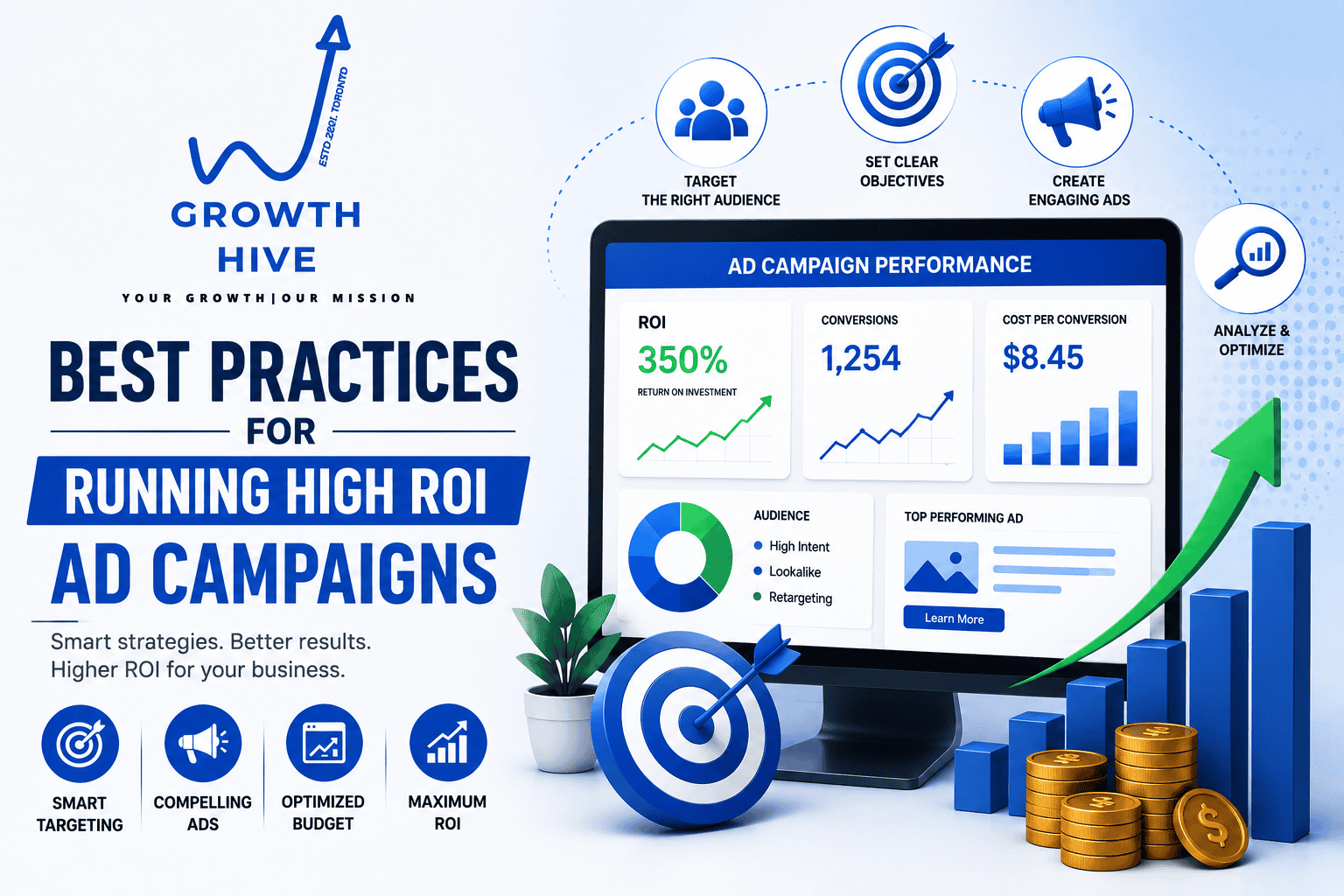
Digital advertising has become one of the most effective ways for businesses to generate leads, increase brand awareness, and drive sales. However, simply launching an ad campaign isn’t enough to achieve meaningful results. Without a clear strategy, businesses often waste advertising budgets on low-performing campaigns.
High Return on Investment (ROI) comes from understanding your audience, creating compelling ads, optimizing campaigns continuously, and making data-driven decisions. Whether you’re running Google Ads, Meta Ads, LinkedIn Ads, or other paid campaigns, following proven best practices can help you maximize every marketing dollar.
In this guide, we’ll explore the most effective strategies for running high ROI ad campaigns that deliver measurable business growth.
What Is a High ROI Ad Campaign?
A high ROI ad campaign generates more revenue than the amount invested in advertising. It focuses on attracting the right audience, converting visitors into customers, and optimizing every stage of the customer journey.
Successful campaigns are built around clear objectives, accurate audience targeting, engaging ad creatives, and continuous performance optimization.
Why ROI Matters in Digital Advertising
Every business has a limited marketing budget. Maximizing ROI ensures that every advertising dollar contributes to business growth.
High ROI campaigns help businesses
- Generate qualified leads.
- Increase online sales.
- Lower customer acquisition costs.
- Improve brand awareness.
- Maximize advertising budgets.
- Achieve sustainable business growth.
Instead of focusing only on clicks or impressions, successful marketers prioritize results that directly impact revenue.
1. Define Clear Campaign Objectives
Every successful advertising campaign starts with a well-defined goal.
Common advertising objectives include:
- Brand awareness.
- Website traffic.
- Lead generation.
- Product sales.
- App downloads.
- Customer retention.
- Event registrations.
Having a clear objective helps you choose the right campaign type, bidding strategy, and performance metrics.
2. Understand Your Target Audience
Reaching the right audience is one of the most important factors in achieving a high ROI.
Before launching a campaign, identify your ideal customers by considering:
Demographics
- Age
- Gender
- Income
- Education
- Occupation
Geographic Location
Target customers based on countries, cities, regions, or local service areas.
Interests and Behaviors
Understand your audience’s hobbies, online behavior, purchasing habits, and preferences.
Customer Pain Points
Focus your messaging on solving real customer problems rather than simply promoting products.
Better audience targeting reduces wasted ad spend and improves conversion rates.
3. Create Compelling Ad Copy
Your ad copy should capture attention quickly and encourage users to take action.
Effective advertising copy includes:
- Clear value propositions.
- Strong headlines.
- Customer-focused messaging.
- Emotional triggers.
- Clear calls-to-action (CTAs).
Examples of effective CTAs include:
- Get Started Today
- Request a Free Quote
- Book a Free Consultation
- Shop Now
- Download the Guide
- Learn More
Focus on benefits rather than features to show customers how your solution improves their lives.
4. Design High-Quality Visuals
Visual content significantly influences ad performance.
Use:
- Professional images.
- Short promotional videos.
- Consistent branding.
- Clean layouts.
- High-contrast CTA buttons.
- Mobile-friendly designs.
Strong visuals help attract attention and improve engagement across advertising platforms.
5. Optimize Landing Pages
An excellent advertisement can still fail if it leads to a poor landing page.
A high-converting landing page should include:
- Fast loading speed.
- Mobile responsiveness.
- Clear messaging.
- Strong headlines.
- Trust signals.
- Customer testimonials.
- Simple contact forms.
- Prominent call-to-action buttons.
The landing page should align closely with the ad’s message to create a seamless user experience.
6. Choose the Right Advertising Platform
Different platforms serve different business goals.
Google Ads
Ideal for capturing users actively searching for products or services.
Best for:
- Search campaigns.
- Shopping campaigns.
- Local businesses.
- Lead generation.
Meta Ads (Facebook & Instagram)
Excellent for brand awareness, audience targeting, and visual storytelling.
Best for:
- eCommerce.
- Brand awareness.
- Lead generation.
- Retargeting.
LinkedIn Ads
Highly effective for B2B marketing and professional services.
Best for:
- Business decision-makers.
- Recruitment.
- Professional networking.
- Enterprise lead generation.
Selecting the right platform ensures your advertising budget reaches the most relevant audience.
7. Use Audience Retargeting
Most website visitors don’t convert during their first visit.
Retargeting allows businesses to reconnect with users who previously interacted with their website, products, or advertisements.
Retargeting campaigns often produce:
- Higher conversion rates.
- Lower acquisition costs.
- Improved customer recall.
- Better overall ROI.
These campaigns keep your brand visible throughout the customer’s buying journey.
8. Continuously Test and Optimize
Successful advertisers never rely on assumptions.
Conduct A/B testing for:
- Headlines.
- Ad copy.
- Images.
- Videos.
- CTA buttons.
- Landing pages.
- Audience segments.
Small improvements can significantly increase campaign performance over time.
9. Monitor Key Performance Metrics
Tracking campaign performance helps identify what’s working and what needs improvement.
Important advertising metrics include:
- Click-Through Rate (CTR)
- Conversion Rate
- Cost Per Click (CPC)
- Cost Per Acquisition (CPA)
- Return on Ad Spend (ROAS)
- Customer Lifetime Value (CLV)
- Quality Score
- Impression Share
Regular monitoring enables businesses to make informed decisions and improve campaign profitability.
10. Allocate Budget Strategically
Avoid spreading your budget evenly across every campaign.
Instead:
- Invest more in top-performing campaigns.
- Pause underperforming ads.
- Scale successful audiences.
- Increase budgets gradually.
- Monitor spending regularly.
Strategic budget allocation maximizes advertising efficiency while reducing unnecessary expenses.
Common Mistakes That Reduce Ad ROI
Many businesses struggle with advertising because they make avoidable mistakes, including:
- Targeting overly broad audiences.
- Using weak ad copy.
- Ignoring mobile optimization.
- Sending traffic to poor landing pages.
- Failing to test ad variations.
- Neglecting campaign analytics.
- Stopping campaigns too early before collecting sufficient data.
Avoiding these mistakes can significantly improve campaign performance.
Best Practices for Long-Term Advertising Success
To consistently achieve strong ROI, businesses should:
- Understand customer behavior.
- Focus on solving customer problems.
- Refresh ad creatives regularly.
- Optimize landing pages continuously.
- Use remarketing campaigns.
- Analyze campaign performance weekly.
- Stay updated with platform changes and advertising trends.
Digital advertising is an ongoing optimization process—not a one-time setup.
The Future of High ROI Advertising
Artificial Intelligence (AI), automation, and predictive analytics are changing the way businesses manage advertising campaigns. AI-powered bidding strategies, audience segmentation, and creative optimization are helping marketers improve performance while reducing manual effort.
Businesses that combine automation with strategic planning and continuous testing will be better positioned to achieve sustainable advertising success.
Conclusion
Running high ROI ad campaigns requires more than simply increasing your advertising budget. Success comes from setting clear objectives, targeting the right audience, creating compelling creatives, optimizing landing pages, and continuously analyzing performance.
Businesses that adopt a data-driven approach and focus on ongoing optimization can reduce acquisition costs, improve conversions, and maximize the return on every advertising investment. By following these best practices, you’ll build campaigns that not only generate clicks but also deliver measurable business growth.

Leave a Reply