



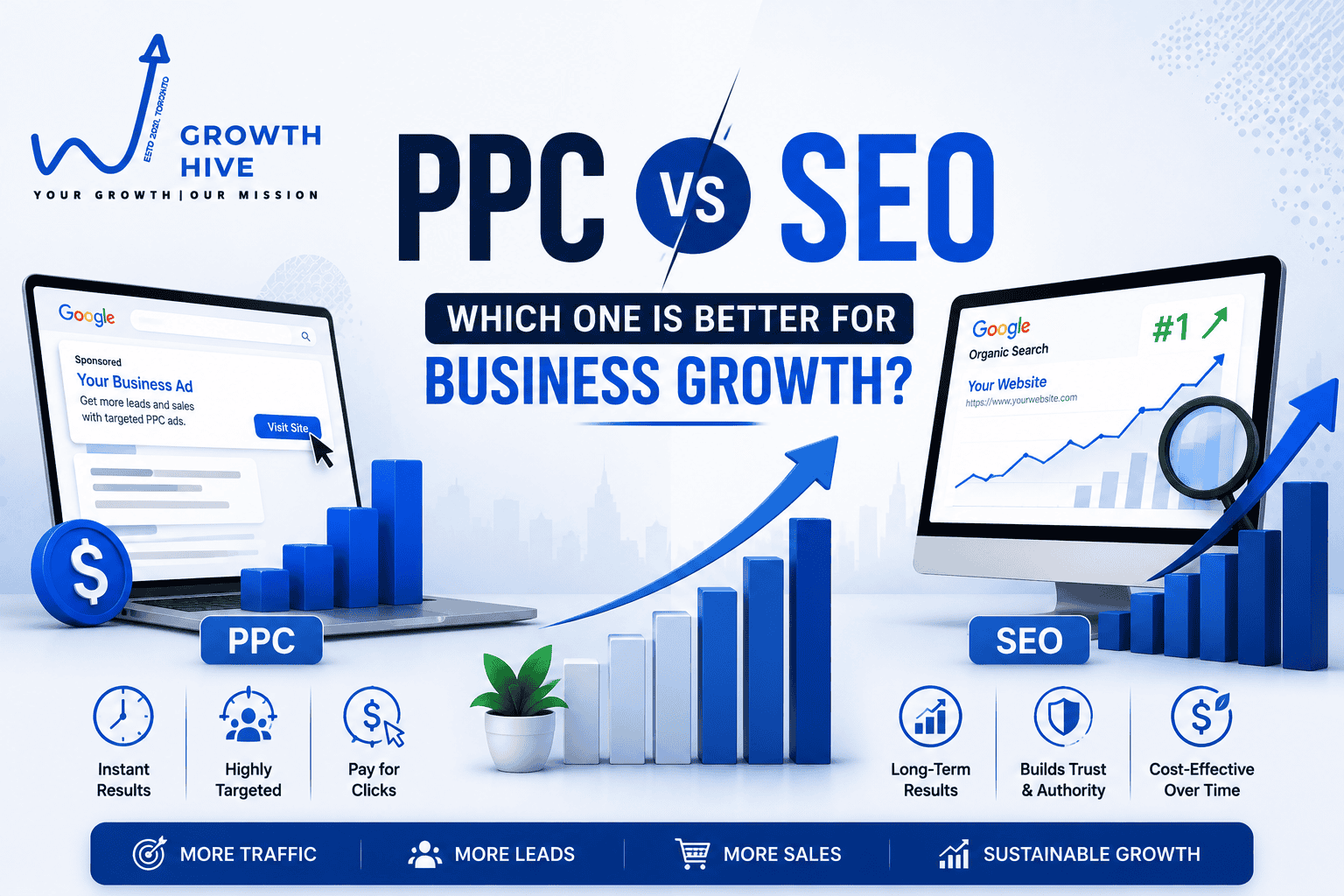
In today’s competitive digital landscape, businesses need effective online marketing strategies to attract customers, generate leads, and increase revenue. Two of the most powerful digital marketing methods are pay-per-click (PPC) advertising and search engine optimization (SEO). While both aim to increase website visibility and drive traffic, they work in very different ways.
Many business owners ask the same question: Should I invest in PPC or SEO?
The answer isn’t always straightforward. The best choice depends on your business goals, budget, competition, and growth timeline. In this guide, we’ll compare PPC and SEO, explore their advantages and limitations, and help you determine which strategy is right for your business.
What Is PPC?
Pay-Per-Click (PPC) is an online advertising model where businesses pay each time someone clicks on their advertisement. Platforms like Google Ads, Microsoft Ads, Facebook, Instagram, and LinkedIn allow businesses to display paid advertisements to highly targeted audiences.
With PPC, your ads can appear at the top of search engine results pages (SERPs) almost immediately after launching a campaign.
Benefits of PPC
- Immediate visibility on search engines.
- Fast lead generation.
- Highly targeted audience selection.
- Flexible budget control.
- Measurable campaign performance.
- Quick testing of offers and landing pages.
- Excellent for product launches and promotions.
PPC is particularly useful when businesses need immediate traffic or want to promote time-sensitive campaigns.
What Is SEO?
Search Engine Optimization (SEO) is the process of improving your website so it ranks higher in organic search results. Unlike PPC, SEO focuses on earning traffic naturally rather than paying for each visitor.
SEO includes optimizing website content, improving technical performance, building backlinks, and creating valuable resources that match user search intent.
Benefits of SEO
- Long-term organic traffic.
- Higher credibility and trust.
- Lower cost per acquisition over time.
- Improved user experience.
- Sustainable business growth.
- Better brand authority.
- Continuous lead generation without paying for every click.
Although SEO requires patience, it delivers lasting results that continue generating value long after content is published.
PPC vs SEO: Key Differences
| Feature | PPC | SEO |
|---|---|---|
| Results | Immediate | Long-term |
| Traffic | Paid | Organic |
| Cost | Pay for every click | Investment in optimization |
| Visibility | Instant | Gradual improvement |
| Sustainability | Stops when budget ends | Continues with ongoing optimization |
| Credibility | Labeled as sponsored | Viewed as more trustworthy |
| ROI Timeline | Short-term | Long-term |
Both strategies have unique strengths, making them valuable for different business objectives.
When PPC Is the Better Choice
PPC works best when businesses need quick results.
Choose PPC if you want to:
- Launch a new product or service.
- Generate leads immediately.
- Promote seasonal offers.
- Test new markets.
- Increase sales quickly.
- Target highly competitive keywords.
- Drive traffic to specific landing pages.
Because campaigns can be launched within hours, PPC is ideal for businesses that need fast visibility.
When SEO Is the Better Choice
SEO is the better option for businesses focused on sustainable growth.
Invest in SEO if your goal is to:
- Build long-term website traffic.
- Improve online credibility.
- Increase brand authority.
- Reduce long-term marketing costs.
- Rank for valuable industry keywords.
- Generate consistent leads over time.
Although SEO takes longer to show results, it often provides a higher return on investment over the long run.
Comparing Costs
One of the biggest differences between PPC and SEO is how businesses invest their marketing budget.
PPC Costs
With PPC, you pay every time someone clicks on your ad. Costs vary depending on:
- Industry competition.
- Keyword demand.
- Target audience.
- Geographic location.
- Quality Score.
- Bidding strategy.
Highly competitive industries often have significantly higher advertising costs.
SEO Costs
SEO typically involves investing in:
- Website optimization.
- Content creation.
- Technical improvements.
- Keyword research.
- Link building.
- Ongoing maintenance.
While SEO requires continuous effort, it doesn’t charge you for every visitor who lands on your website.
Which Strategy Delivers Better ROI?
The return on investment depends on your business goals.
PPC ROI
PPC can produce excellent short-term ROI when campaigns are well-managed. Businesses often see immediate leads and sales, making it suitable for businesses needing rapid growth.
However, once advertising stops, traffic usually stops as well.
SEO ROI
SEO generally produces stronger long-term ROI because organic rankings continue attracting visitors without ongoing click costs.
A well-optimized blog post or service page can generate qualified traffic for months or even years.
Can PPC and SEO Work Together?
Absolutely.
The most successful businesses don’t choose one over the other—they combine both strategies.
Using PPC and SEO together allows businesses to:
- Capture both paid and organic search traffic.
- Increase brand visibility.
- Test keywords before investing in SEO.
- Generate immediate leads while SEO builds long-term authority.
- Improve overall marketing performance.
A combined strategy creates a balanced approach that delivers both short-term wins and sustainable growth.
Common Mistakes Businesses Make
Many businesses fail to maximize results because they:
- Focus only on one marketing channel.
- Ignore keyword research.
- Send paid traffic to poorly optimized landing pages.
- Stop SEO efforts too early.
- Fail to track campaign performance.
- Neglect mobile optimization.
- Ignore user experience.
Avoiding these mistakes helps businesses achieve better marketing outcomes and higher ROI.
How to Choose the Right Strategy
Ask yourself the following questions before making a decision:
Do You Need Immediate Results?
If yes, PPC is often the better option.
Are You Focused on Long-Term Growth?
If yes, SEO should be a priority.
What Is Your Marketing Budget?
Businesses with larger budgets can benefit from running PPC while simultaneously investing in SEO.
How Competitive Is Your Industry?
Highly competitive industries often require a combination of paid advertising and strong SEO to remain visible.
Best Practices for Maximum Business Growth
Whether you choose PPC, SEO, or both, follow these best practices:
- Set clear marketing objectives.
- Research your target audience thoroughly.
- Focus on high-intent keywords.
- Create valuable, user-focused content.
- Optimize website speed and mobile performance.
- Monitor analytics and campaign performance.
- Continuously test and improve your strategy.
Consistency and ongoing optimization are key to long-term digital marketing success.
Conclusion
The debate between PPC and SEO isn’t about which strategy is universally better—it’s about which one best aligns with your business goals.
If you need immediate traffic, fast lead generation, and quick sales, PPC is an excellent choice. If you’re looking to build long-term authority, reduce acquisition costs, and generate sustainable organic traffic, SEO offers exceptional value.
For many businesses, the strongest results come from combining both approaches. PPC delivers immediate visibility while SEO builds lasting credibility and consistent organic growth. By leveraging the strengths of both strategies, businesses can create a comprehensive digital marketing plan that drives higher traffic, better conversions, and long-term business success.

Leave a Reply