

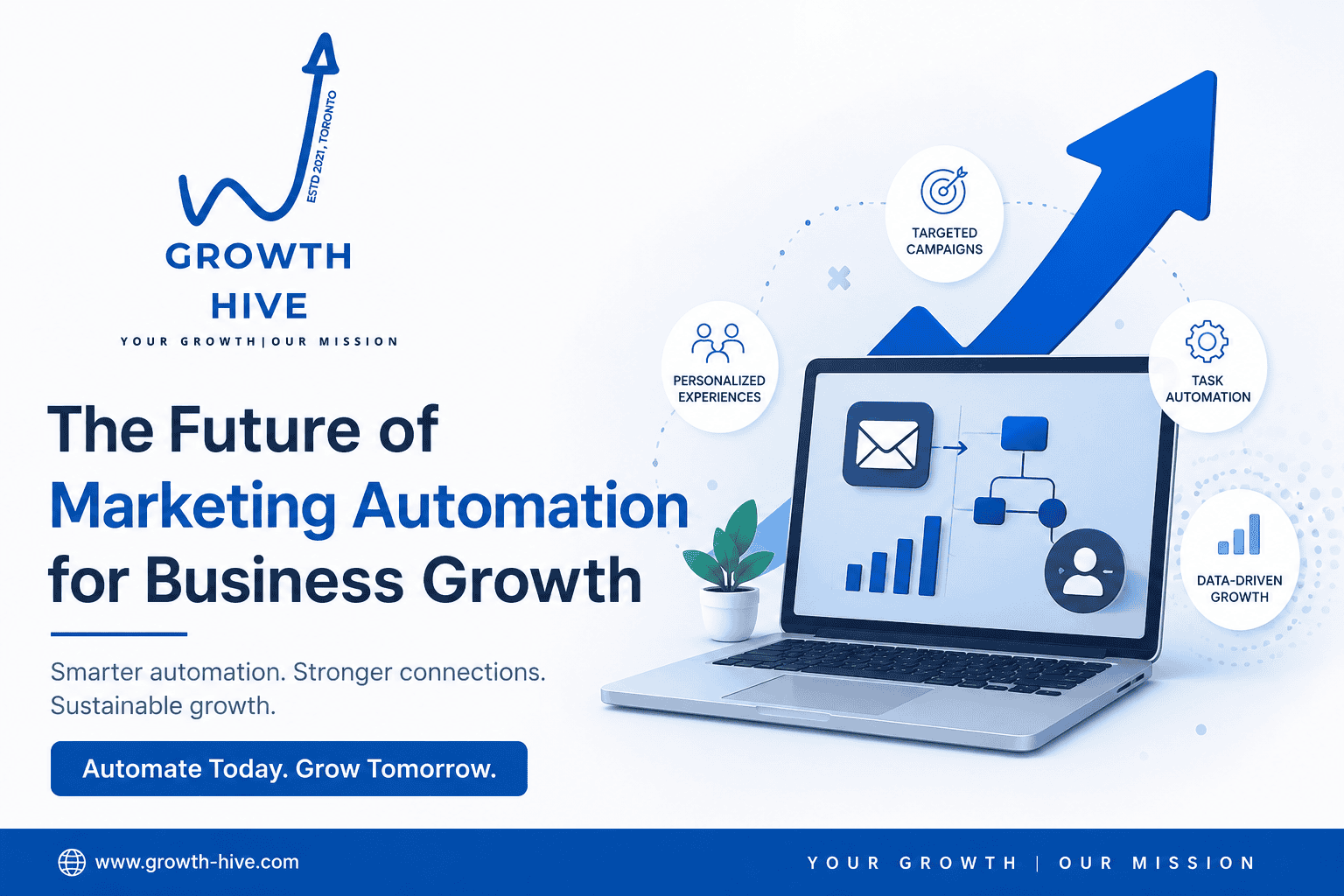
In today’s fast-paced digital landscape, businesses are constantly searching for smarter ways to connect with customers, improve efficiency, and drive revenue. Marketing automation has emerged as a powerful solution, enabling organizations to streamline repetitive tasks, nurture leads, and deliver personalized experiences at scale. As technology continues to evolve, the future of marketing automation promises even greater opportunities for sustainable business growth.
What Is Marketing Automation?
Marketing automation refers to the use of software and technology to automate marketing activities such as email campaigns, social media posting, lead nurturing, customer segmentation, and performance tracking. By reducing manual work, businesses can focus more on strategy, creativity, and customer relationships.
Modern marketing automation platforms help companies engage prospects at the right time with the right message, increasing conversion rates while improving operational efficiency.
The Evolution of Marketing Automation
Marketing automation has come a long way from simple email scheduling tools. Today’s solutions integrate artificial intelligence (AI), machine learning, predictive analytics, and customer relationship management (CRM) systems to create highly personalized customer journeys.
As consumer expectations continue to rise, businesses must move beyond generic marketing messages and adopt intelligent automation systems capable of understanding customer behavior, preferences, and purchasing patterns.
Key Trends Shaping the Future of Marketing Automation
1. Artificial Intelligence-Powered Personalization
AI is revolutionizing marketing automation by enabling businesses to deliver highly personalized content and recommendations. Future automation platforms will analyze customer data in real time, allowing brands to tailor messaging, offers, and experiences to individual users.
This level of personalization helps businesses improve engagement, strengthen customer loyalty, and increase sales conversions.
2. Predictive Analytics for Smarter Decision-Making
Predictive analytics uses historical data and machine learning algorithms to forecast future customer actions. Businesses can identify potential buyers, predict churn risks, and optimize campaigns before problems arise.
As predictive technologies become more advanced, marketing teams will be able to allocate resources more effectively and maximize return on investment (ROI).
3. Omnichannel Marketing Automation
Customers interact with brands across multiple channels, including websites, email, social media, mobile apps, and messaging platforms. Future marketing automation systems will provide seamless omnichannel experiences by synchronizing communication across every touchpoint.
This unified approach ensures customers receive consistent messaging regardless of where they engage with a business.
4. Advanced Customer Journey Mapping
Businesses are increasingly focusing on understanding the complete customer journey. Future automation platforms will provide deeper insights into customer interactions, helping marketers create more relevant and timely campaigns.
Automated workflows will adapt dynamically based on customer behavior, delivering personalized experiences throughout every stage of the buying process.
5. Voice Search and Conversational Marketing
With the growing popularity of voice assistants and chatbots, conversational marketing is becoming an essential component of automation strategies. Businesses will leverage AI-powered chatbots to provide instant support, answer questions, and guide customers through purchasing decisions.
Voice search optimization will also play a crucial role in helping brands remain visible in evolving search environments.
Benefits of Marketing Automation for Business Growth
Increased Efficiency
Marketing automation eliminates repetitive tasks, allowing teams to focus on high-value activities such as strategy development and customer engagement.
Improved Lead Generation and Nurturing
Automated workflows help businesses attract, qualify, and nurture leads more effectively, resulting in higher conversion rates and stronger sales pipelines.
Enhanced Customer Experience
Personalized communication and timely interactions create a better customer experience, leading to greater satisfaction and long-term loyalty.
Better Data-Driven Decisions
Automation platforms provide valuable insights into customer behavior and campaign performance, enabling businesses to make informed marketing decisions.
Higher Return on Investment
By optimizing campaigns and reducing manual effort, businesses can achieve better results while minimizing operational costs.
Challenges Businesses Must Address
While marketing automation offers significant advantages, businesses should also be mindful of potential challenges. Data privacy regulations, integration complexities, and maintaining authentic customer interactions require careful planning and execution.
Companies that prioritize transparency, data security, and customer trust will be better positioned to maximize the benefits of automation technologies.
Preparing for the Future
To remain competitive, businesses should begin investing in scalable marketing automation solutions that can adapt to changing customer expectations and technological advancements. Organizations should also focus on collecting high-quality customer data, integrating systems, and developing automation strategies aligned with their long-term goals.
The most successful companies will use automation not to replace human interaction but to enhance it, creating meaningful and personalized customer experiences that drive growth.
Conclusion
The future of marketing automation is driven by artificial intelligence, predictive analytics, personalization, and omnichannel engagement. As these technologies continue to advance, businesses will gain unprecedented opportunities to improve efficiency, strengthen customer relationships, and accelerate growth.
Companies that embrace modern marketing automation strategies today will be better equipped to navigate tomorrow’s competitive landscape. By combining technology with customer-centric marketing approaches, businesses can unlock sustainable growth and build lasting success in the digital age.

Leave a Reply