


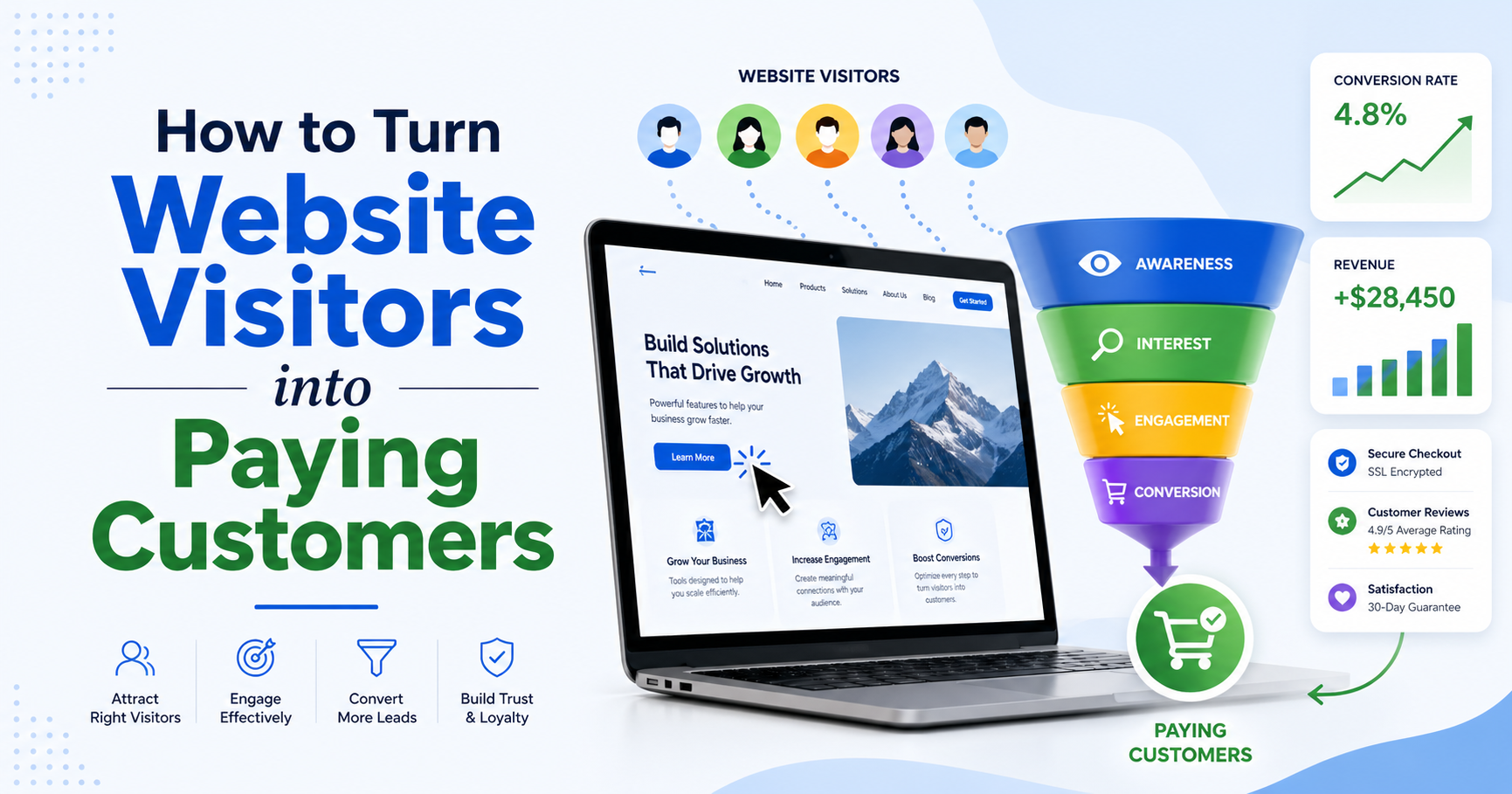
Getting people to visit your website is a big achievement. But traffic alone does not grow your business. The real goal is to turn those visitors into paying customers.
Many businesses spend time and money bringing people to their website, but they forget one important thing: visitors need a reason to stay, trust you, and take action. A good website does not just look beautiful. It guides people step by step toward making a decision.
In this blog, we will explain practical ways to convert website visitors into customers.
1. Make Your Message Clear
When someone lands on your website, they should quickly understand three things:
What you offer, who it is for, and why they should choose you.
If your homepage is confusing, visitors may leave within seconds. Avoid complicated words and long paragraphs. Instead, use simple and direct language.
For example, instead of saying:
“We provide advanced digital solutions for business growth.”
Say:
“We help small businesses get more customers through better websites and digital marketing.”
Clear messaging builds confidence. When visitors understand your offer quickly, they are more likely to stay and explore.
2. Understand What Your Customers Need
Your website should not only talk about your business. It should speak to your customer’s problems, needs, and goals.
Before writing website content, ask yourself:
What problem is my customer facing?
What result do they want?
What fear or doubt might stop them from buying?
When your content answers these questions, visitors feel understood. And when people feel understood, they are more likely to trust you.
For example, if you sell website design services, do not only say, “We build modern websites.” Say something like:
“Your website should not just look good. It should help you get leads, calls, and sales.”
That connects directly with the customer’s real goal.
3. Build Trust with Proof
People do not buy from a website just because it looks nice. They buy when they feel safe and confident.
You can build trust by adding:
Customer reviews
Testimonials
Case studies
Before-and-after results
Client logos
Certifications
Real photos of your team or work
Social proof is powerful because it shows that other people have already trusted your business. If a visitor sees positive reviews or real results, they are more likely to believe in your offer.
Even one strong testimonial can make a big difference.
4. Use Strong Calls to Action
A call to action, or CTA, tells visitors what to do next. Without a clear CTA, people may like your website but still leave without taking action.
Your CTA should be simple, visible, and action-focused.
Good examples include:
“Book a Free Consultation”
“Get a Quote Today”
“Start Your Free Trial”
“Contact Us Now”
“Download the Guide”
Avoid weak CTAs like “Submit” or “Click Here.” These do not clearly explain the benefit.
Also, place your CTA in important areas of your website, such as the homepage banner, service pages, blog posts, and contact section.
5. Make Your Website Easy to Use
A confusing website can push visitors away. Your website should be simple to navigate, especially on mobile devices.
Make sure your website has:
Fast loading speed
Clear menu options
Mobile-friendly design
Easy-to-read text
Simple contact forms
Visible phone number or email
No unnecessary pop-ups
If people cannot find what they need quickly, they may go to a competitor’s website. A smooth user experience makes it easier for visitors to become customers.
6. Offer Something Valuable First
Not every visitor is ready to buy immediately. Some people need more information before making a decision.
You can help them by offering something valuable for free, such as:
A helpful guide
A checklist
A free consultation
A discount code
A webinar
A product demo
An email newsletter
This helps you collect leads and stay connected with potential customers. Once they trust your advice, they are more likely to buy from you later.
7. Write Content That Answers Questions
Blog posts, FAQs, and service pages can help visitors make better decisions. When your website answers common questions, it builds authority and trust.
For example, if you run a digital marketing agency, you can write blogs like:
“How Much Does SEO Cost?”
“Why Your Website Is Not Getting Leads”
“Best Ways to Improve Website Conversion Rate”
“How to Choose the Right Web Design Company”
Helpful content brings visitors through search engines and also guides them toward your services.
8. Reduce Customer Doubts
Many visitors leave because they still have doubts. Your website should answer those doubts before they become objections.
Common doubts include:
Is this company reliable?
Is the price worth it?
Will this solve my problem?
What happens after I contact them?
Are there hidden charges?
You can reduce doubts by adding clear pricing, process steps, FAQs, guarantees, refund policies, or consultation details.
The more clarity you provide, the easier it becomes for visitors to take action.
9. Use Follow-Up Strategies
Sometimes people visit your website, show interest, but do not buy immediately. That does not mean they are lost.
You can bring them back through follow-up strategies like:
Email marketing
Retargeting ads
WhatsApp follow-ups
Abandoned cart emails
Special offers
Reminder messages
Follow-up keeps your business in the visitor’s mind. Many customers need more than one interaction before they make a purchase.
10. Test and Improve Your Website
Conversion is not a one-time task. You should regularly test and improve your website.
Track important data such as:
How many people visit your website
Which pages they visit most
Where they leave the website
How many people fill out forms
How many visitors become customers
Tools like Google Analytics, heatmaps, and form tracking can help you understand visitor behavior.
Small changes can create big results. For example, changing a CTA button, improving a headline, or simplifying a form can increase conversions.
Final Thoughts
Turning website visitors into paying customers is not about using tricks. It is about making your website clear, helpful, trustworthy, and easy to use.
Your visitors should quickly understand what you offer, why it matters, and what action they should take next. When your website solves problems, builds trust, and guides people properly, more visitors will become real customers.


Leave a Reply