



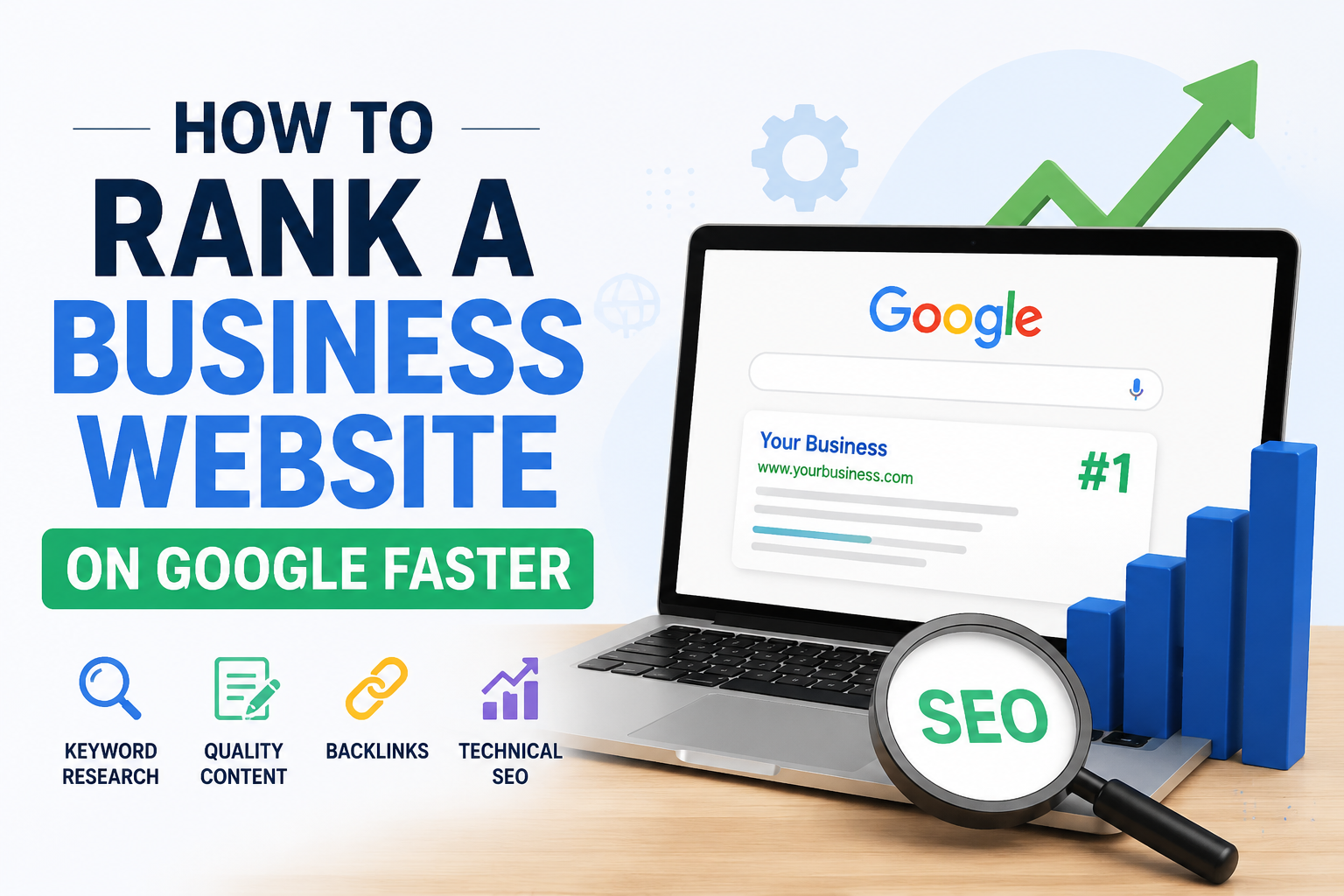
As a business owner, having an online presence is crucial to reaching your target audience. But just having a website isn’t enough—you need to rank on Google to ensure people can find you. The higher your ranking, the more traffic you’ll get, and ultimately, the more customers you’ll attract. So, how can you rank your business website on Google faster? Here’s a guide to get you there!
1. Start with Solid Keyword Research
Before diving into SEO techniques, you need to know which keywords your target audience is searching for. These are the words or phrases people use when looking for products or services you offer. By targeting the right keywords, you can position your business in front of the people who need it the most.
Tip: Use tools like Google Keyword Planner, SEMrush, or Ahrefs to find relevant keywords that align with your business. Focus on long-tail keywords (phrases with 3 or more words) because they are often less competitive and more specific.
2. Optimize Your On-Page SEO
On-page SEO is the practice of optimizing elements on your website to make it more attractive to Google. It includes your page titles, headers, URL structure, and content. Here’s what you can do to improve it:
- Title Tags: Make sure your titles are clear, concise, and include your target keyword.
- Meta Descriptions: Write compelling meta descriptions that encourage clicks. Keep them under 160 characters and include your target keyword.
- Headers and Content: Use H1 tags for your main title and H2 or H3 for subheadings. Your content should be high-quality, informative, and naturally incorporate your keywords.
Tip: Don’t keyword-stuff! Google values quality over quantity. Make your content helpful and user-friendly.
3. Improve Your Website’s Load Speed
Website speed is a major ranking factor. A slow-loading website can frustrate visitors and make them leave before they even see what you have to offer. In fact, Google has indicated that site speed is a ranking factor, and slow pages can harm your SEO efforts.
To speed up your website:
- Compress images and reduce file sizes.
- Use browser caching.
- Minimize CSS, JavaScript, and HTML files.
- Consider using a content delivery network (CDN) to deliver content faster.
Tip: Tools like Google PageSpeed Insights can help identify areas where you can improve your site’s speed.
4. Build High-Quality Backlinks
Backlinks are links from other websites that point to your website. Google sees backlinks as votes of confidence, indicating that your website is authoritative and trustworthy. The more quality backlinks you have, the better your chances of ranking higher.
To build backlinks:
- Create valuable content that others want to link to (such as in-depth guides, infographics, and original research).
- Reach out to influencers, bloggers, and industry websites to see if they’d be willing to link to your content.
- Guest post on reputable blogs in your niche.
Tip: Focus on acquiring backlinks from high-authority websites related to your industry.
5. Leverage Local SEO
If you run a local business, local SEO is crucial. This helps you show up in searches related to your business’s location, like “restaurants near me” or “best plumbers in [city].”
To improve your local SEO:
- Create and optimize your Google My Business profile.
- Include your business’s name, address, and phone number (NAP) consistently across your website and directories.
- Gather positive reviews from customers on platforms like Google, Yelp, and Trustpilot.
- Add local keywords to your website content (e.g., “best pizza in New York City”).
Tip: Make sure your website is mobile-friendly since many local searches happen on mobile devices.
6. Publish Regular, Fresh Content
Content is still king when it comes to SEO. Google loves fresh content, and regularly updating your website with new posts, articles, or pages signals to Google that your website is active and relevant.
Here’s how to publish content effectively:
- Write blog posts or articles that address your audience’s pain points and provide solutions.
- Incorporate your target keywords naturally into your content.
- Share content regularly—whether it’s weekly or biweekly, consistency is key.
Tip: Repurpose old content into new formats like videos, infographics, or podcasts to keep it fresh and engaging.
7. Make Your Website Mobile-Friendly
With over 50% of global web traffic coming from mobile devices, Google places a high priority on mobile-friendly websites. If your website isn’t optimized for mobile, you could be missing out on a significant portion of your potential audience.
To ensure your website is mobile-friendly:
- Use a responsive design so your website adjusts to any screen size.
- Keep your mobile navigation simple and user-friendly.
- Test your website’s mobile compatibility using Google’s Mobile-Friendly Test.
8. Focus on User Experience (UX)
User experience (UX) plays a big role in SEO. Google’s algorithm takes into account how users interact with your site—how long they stay, whether they engage with content, and if they leave quickly (bounce rate). A positive UX will encourage visitors to stay longer, which can lead to higher rankings.
To improve UX:
- Make navigation simple and intuitive.
- Use clear calls to action (CTAs) to guide users.
- Ensure your site is visually appealing and easy to read.
Final Thoughts
Ranking your business website on Google faster isn’t a one-time task—it’s an ongoing process. By focusing on solid keyword research, on-page SEO, site speed, backlinks, and other optimization techniques, you’ll gradually improve your rankings and attract more visitors. Remember, the key is consistency. Keep optimizing, and over time, you’ll start to see results!


Leave a Reply