

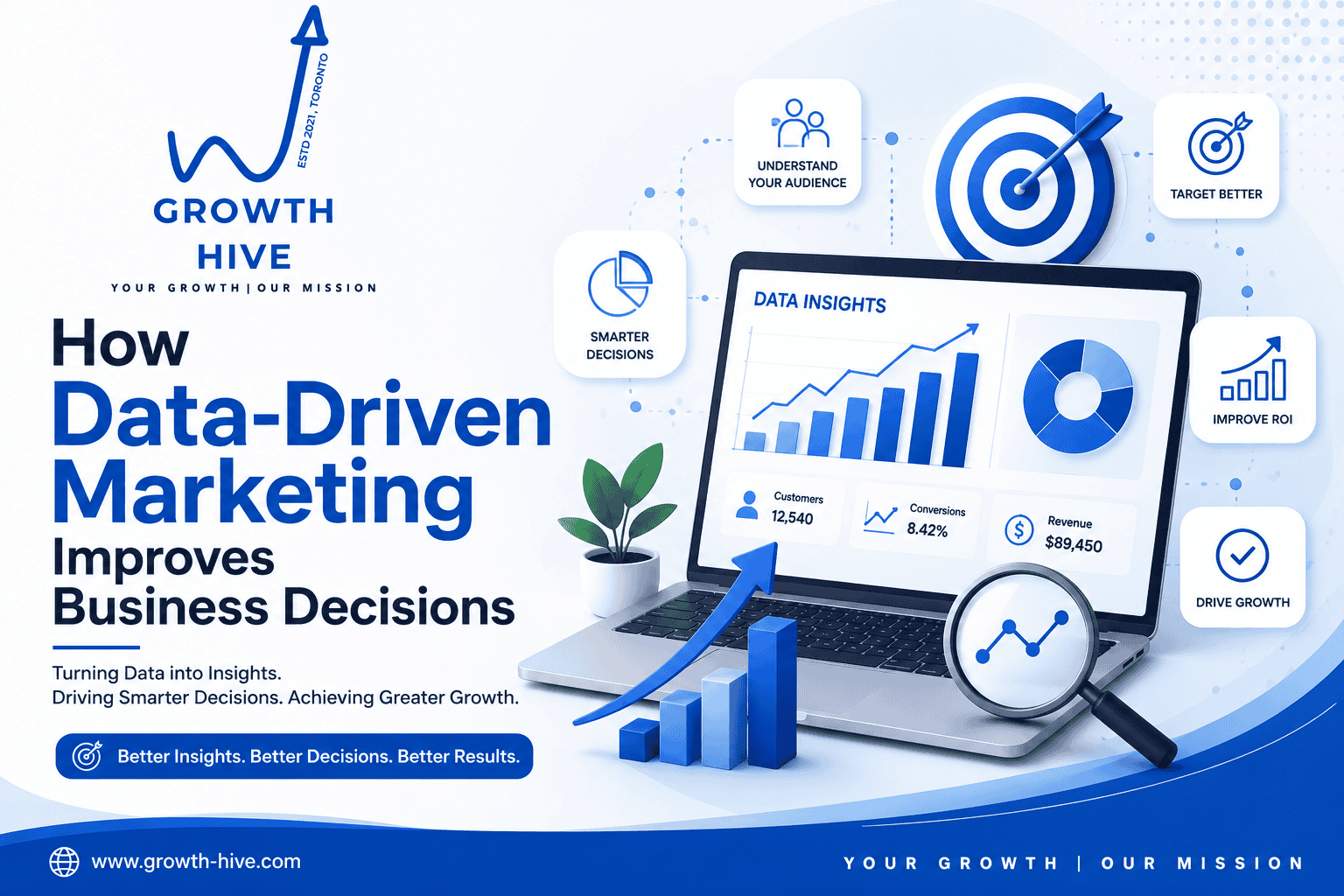
In today’s competitive digital landscape, making decisions based on assumptions is no longer enough. Businesses that leverage accurate data gain a significant advantage by understanding customer behavior, market trends, and campaign performance. This is where data-driven marketing comes into play. By using analytics and insights to guide marketing strategies, businesses can make smarter decisions, optimize resources, and achieve sustainable growth.
Data-driven marketing empowers organizations to move beyond guesswork and create strategies backed by real customer information. As a result, companies can improve marketing effectiveness, increase customer satisfaction, and maximize return on investment (ROI).
What Is Data-Driven Marketing?
Data-driven marketing is the practice of collecting, analyzing, and utilizing customer and market data to make informed marketing decisions. It involves gathering information from various sources, including websites, social media platforms, email campaigns, customer relationship management (CRM) systems, and online advertisements.
By transforming raw data into actionable insights, businesses can better understand their target audience and create marketing campaigns that resonate with customer needs and preferences.
Why Data Matters in Modern Marketing
Consumers generate vast amounts of data through their online interactions. Every website visit, purchase, social media engagement, and email click provides valuable insights into customer behavior.
Businesses that effectively analyze this information can:
- Identify customer preferences and interests.
- Understand purchasing patterns.
- Improve audience targeting.
- Optimize marketing campaigns.
- Increase customer retention.
- Make more accurate business forecasts.
Data allows organizations to make strategic decisions with confidence rather than relying on intuition alone.
Key Ways Data-Driven Marketing Improves Business Decisions
1. Better Understanding of Customer Behavior
One of the biggest advantages of data-driven marketing is the ability to understand customer behavior in detail. Businesses can track how customers interact with their websites, advertisements, emails, and social media content.
These insights help companies answer important questions such as:
- What products are customers most interested in?
- Which marketing channels generate the highest engagement?
- What factors influence purchasing decisions?
With this information, businesses can develop more effective marketing strategies and improve customer experiences.
2. Enhanced Audience Targeting
Traditional marketing often relies on broad audience segments. Data-driven marketing allows businesses to create highly targeted campaigns based on demographics, interests, browsing behavior, and purchase history.
Precise targeting helps organizations:
- Reach the right audience.
- Reduce advertising waste.
- Increase conversion rates.
- Improve campaign efficiency.
When businesses deliver relevant messages to the right people, marketing performance naturally improves.
3. Improved Marketing ROI
Every marketing dollar matters. Data-driven marketing enables businesses to monitor campaign performance in real time and identify which strategies produce the best results.
Marketers can analyze metrics such as the following:
- Click-through rates (CTR)
- Conversion rates
- Cost per acquisition (CPA)
- Customer lifetime value (CLV)
- Return on ad spend (ROAS)
These insights help businesses allocate budgets more effectively and maximize overall profitability.
4. More Accurate Forecasting and Planning
Data analytics provides valuable information about market trends and customer demand. Businesses can use historical performance data to predict future outcomes and make proactive decisions.
Accurate forecasting helps organizations:
- Plan inventory levels.
- Allocate marketing budgets.
- Prepare for seasonal demand.
- Identify emerging opportunities.
This reduces uncertainty and supports long-term business growth.
5. Personalization at Scale
Modern consumers expect personalized experiences. Data-driven marketing enables businesses to tailor content, recommendations, and offers based on individual customer preferences.
Personalized marketing can include:
- Customized email campaigns.
- Product recommendations.
- Dynamic website content.
- Targeted advertisements.
When customers receive relevant content, they are more likely to engage with a brand and make purchases.
6. Faster Decision-Making
Access to real-time data allows businesses to react quickly to changing market conditions and customer behavior. Marketing teams can identify issues, adjust campaigns, and seize opportunities without waiting for lengthy reporting cycles.
This agility helps businesses remain competitive in fast-moving industries.
Essential Data Sources for Marketing Success
Successful data-driven marketing strategies rely on information collected from multiple channels, including:
Website Analytics
Website data provides insights into visitor behavior, traffic sources, popular pages, and conversion paths.
Social Media Analytics
Social platforms offer valuable information about audience engagement, content performance, and customer sentiment.
Customer Relationship Management (CRM) Systems
CRM platforms help businesses track customer interactions, purchase history, and communication preferences.
Email Marketing Metrics
Email analytics reveal open rates, click rates, conversions, and subscriber engagement levels.
Paid Advertising Platforms
Advertising platforms provide performance data that helps optimize targeting, bidding strategies, and creative assets.
Challenges of Data-Driven Marketing
While data-driven marketing offers numerous benefits, businesses must address several challenges:
Data Privacy and Compliance
Organizations must comply with data protection regulations and ensure customer information is handled responsibly.
Data Quality Issues
Poor-quality or incomplete data can lead to inaccurate insights and ineffective decision-making.
Integration Complexities
Combining data from multiple platforms requires proper tools and processes to ensure accuracy and consistency.
Skills and Expertise
Businesses need skilled professionals who can interpret data and turn insights into actionable strategies.
Best Practices for Implementing Data-Driven Marketing
To maximize success, businesses should:
- Establish clear marketing objectives.
- Collect data from reliable sources.
- Invest in analytics and reporting tools.
- Focus on customer privacy and transparency.
- Continuously monitor performance metrics.
- Use insights to optimize campaigns regularly.
A strategic approach ensures data becomes a valuable asset rather than an overwhelming collection of numbers.
The Future of Data-Driven Marketing
As artificial intelligence (AI), machine learning, and predictive analytics continue to evolve, data-driven marketing will become even more powerful. Businesses will gain deeper customer insights, automate decision-making processes, and create increasingly personalized experiences.
Companies that embrace data-driven strategies today will be better positioned to adapt to changing customer expectations and market dynamics in the future.
Conclusion
Data-driven marketing has transformed how businesses make decisions. By leveraging customer insights, analytics, and performance metrics, organizations can improve targeting, increase ROI, personalize customer experiences, and make smarter strategic choices.
In a world where information drives success, businesses that utilize data effectively gain a competitive advantage. Investing in data-driven marketing is no longer optional—it’s essential for sustainable growth, informed decision-making, and long-term business success.


Leave a Reply